Operating Principles

Based on Distributed Leadership concepts, MN-ICECI has adopted the following:

  • Leadership is the product of an interacting group or network of individuals—not based on actions of one single person.
  • Expertise is distributed across the MN-ICECI project and not concentrated in the hands of select persons.
  • Leadership is open to those who might have been previously excluded.
Systems Change

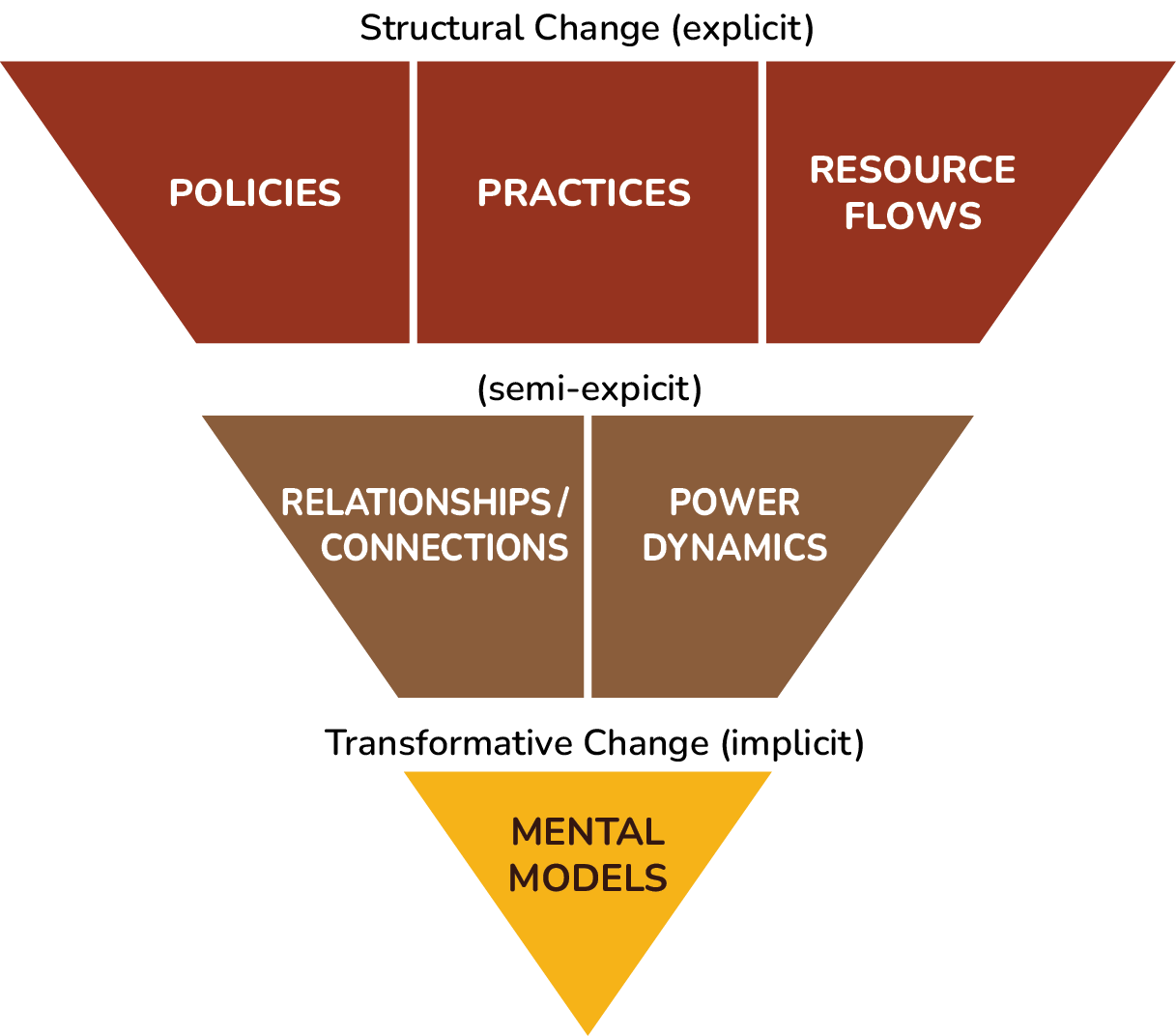
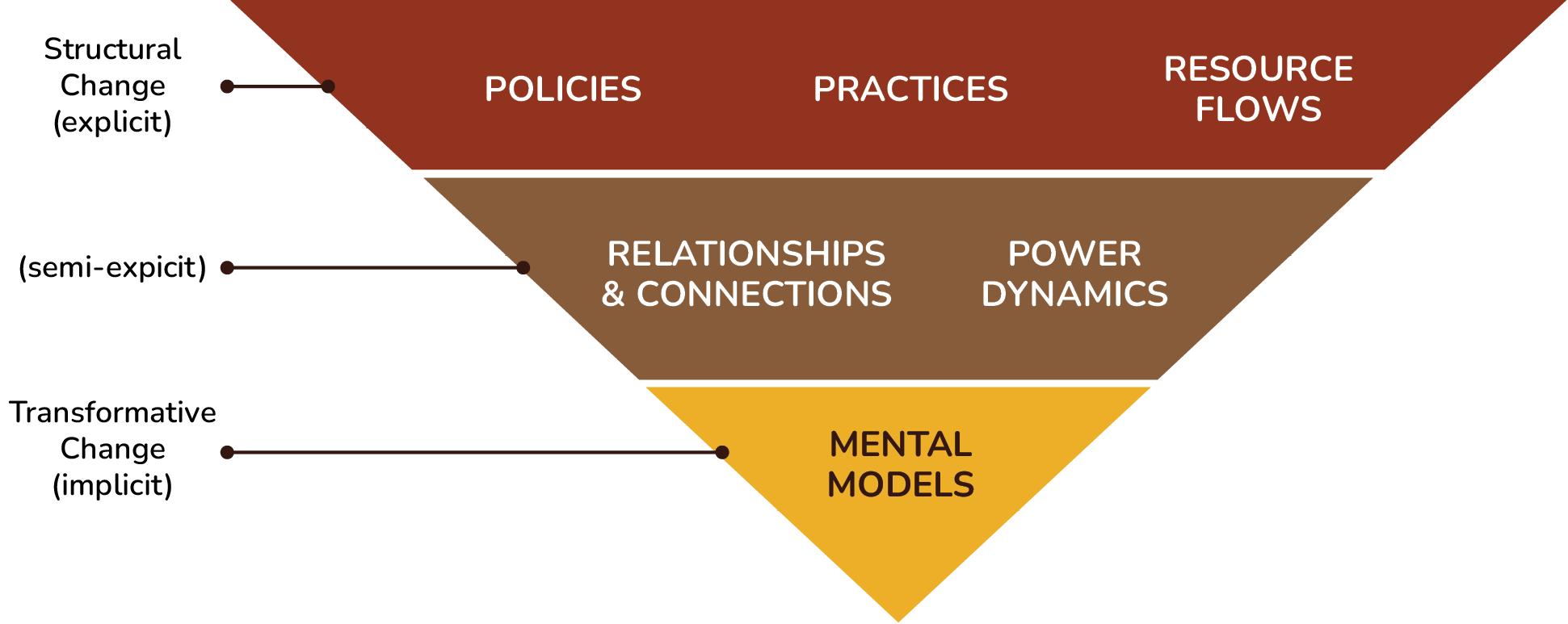
One tool that MN-ICECI is using to better understand The Waters of Systems Change” developed by Kania, Kramer, and Senge to help change the early childhood system to be more equitable for African American families. The framework shows six key elements related to systems change: policies, practices, resource flows, relationships and connections, power dynamics, and mental models. Each of these elements play a crucial role in understanding and influencing changes within a system. The framework illustrates connections woven between the elements and encourages movement toward more transformative change by going  beyond structures to build  relationships and then ultimately shifting narratives.

Conditions Of Systems Change, Defined

Policies
Rules, regulations, and priorities that guide actions.

Practices
The procedures, guidelines, or informal shared habits that comprise work.

Resource Flows
How money, people, knowledge,information, and other assets such as infrastructure are allocated and distributed.

Relationships & Connections
Quality of connections and communication occurring among actors in the system, especially among those with differing histories and viewpoints.

Power Dynamics
The distribution of decision-making power, authority, and both formal and informal influence among individuals and organizations.

Mental Models
Habits of thought—deeply held beliefs and assumptions and taken-for-granted ways of operating that ifluence how we think, what we do, and how we talk.